What NOT to Fix Before Selling Your Austin Home in 2026

What NOT to Fix Before Selling Your Austin Home in 2026
Most presale advice tells you what to fix — this post is about the $15,000, $30,000, and $50,000 mistakes Austin sellers make every spring by improving things buyers will either ignore, discount, or actively penalize them for. With 47% of active Austin metro listings already carrying price reductions in 2026, the sellers who net the most aren't the ones who spent the most before listing. They're the ones who spent strategically — and stopped before they crossed the line into over-improvement.
I come from a QA engineering background. Before I was a realtor, my job was to find what fails before it fails in production. That same mindset applies here: not every fix prevents a problem. Some "fixes" create problems — with appraisals, with HOAs, with buyers who do their own math. Here's where Austin sellers consistently go wrong.

The Pergola That Cost One Seller 45 Days and 7%
A seller in a Cedar Park neighborhood invested $25,000 in a pergola the spring before listing. Custom wood structure, built-in lighting, the works. It looked good in photos. What happened next is a pattern I've seen repeat in different forms across Austin suburbs: buyers walked through, saw a large wooden structure requiring annual sealing, potential HOA compliance questions, and pest management in Central Texas heat — and mentally adjusted their offer downward. The home sat 45 days longer than comparable listings and closed 7% below the seller's expectation.
The problem wasn't the pergola itself. The problem was the seller optimized for their own taste rather than buyer calculus. In a market where buyers are comparison-shopping 12 homes in a weekend, anything that reads as "extra maintenance" is a negotiating chip in the buyer's hand, not a feature in yours. That's the core principle behind everything on this list.
Swimming Pools: The $60,000 Liability Most Austin Sellers Misread
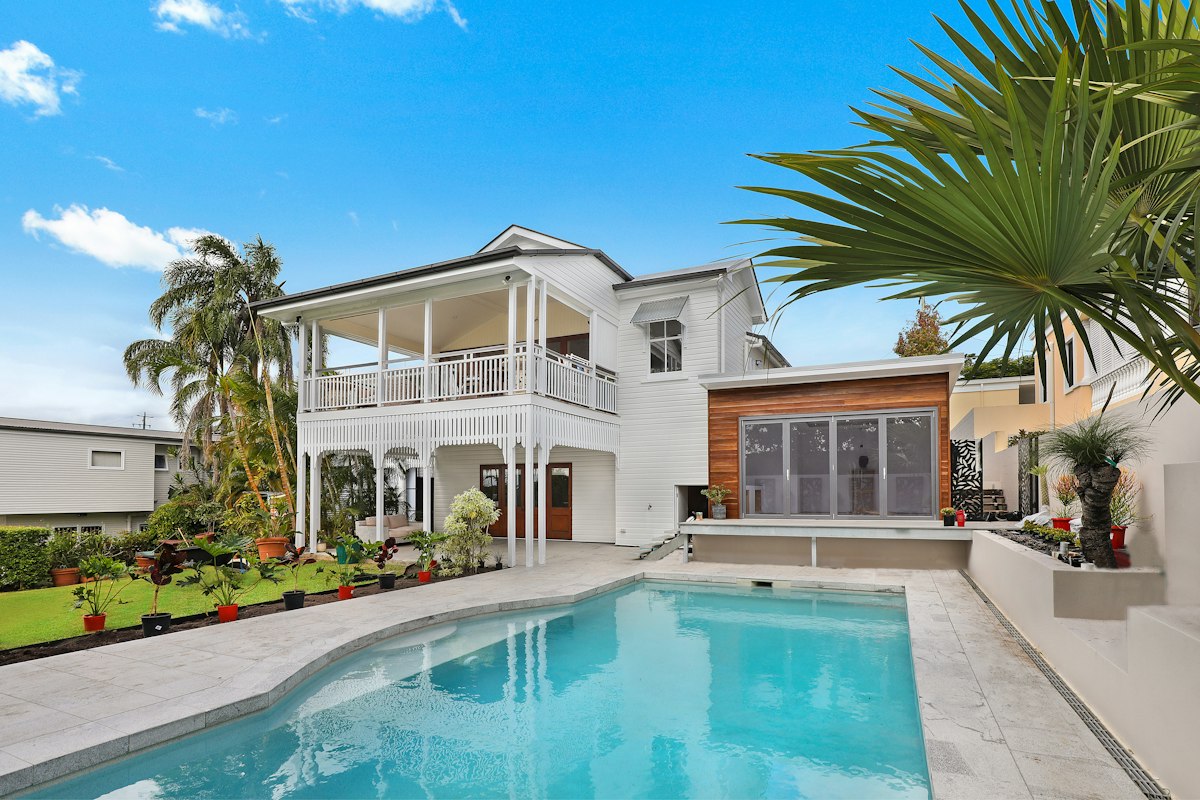
Installing a pool before listing is one of the most reliably negative ROI moves a seller can make in the Austin suburbs. The numbers are not close. A pool installation in Central Texas runs $50,000 to $80,000 at current contractor rates. The value it adds to a home in most Austin suburban neighborhoods: $15,000 to $25,000, according to local appraisal data. That's a best-case loss of $25,000 before you factor in the time it takes to build — typically 3 to 6 months — and the insurance premium increase that shows up on your listing's estimated carrying costs.
Existing pools present a different calculation. If your home already has a pool, it can be a genuine asset — especially for buyers with families and the right lifestyle profile. But even then, the pool needs to pass inspection cleanly. Cracked coping, failing equipment, outdated safety fencing, or a non-compliant drain cover are all items that will show up in an inspection report and become negotiating leverage for the buyer. If your pool has deferred maintenance, fix the safety and mechanical items. Don't add new water features, extended decking, or resort-style landscaping around it. You will not recover that spend at closing.

Solar Panels: The Math Changed in 2026
The federal 30% solar Investment Tax Credit expired at the end of 2025. That changes the seller's calculus on solar significantly. Before the credit expired, the argument for presale solar installation was already marginal — average Austin installation runs $25,000 to $30,000, and the value added to a home in Texas is roughly 4.1%, or about $16,400 on a $400,000 home. Even with the federal credit, you were not fully recovering your investment at sale.
Without the federal credit, the payback period on a new solar installation jumps from roughly 5 years to 9–10 years. That's not a presale investment — that's a long-term hold strategy. Austin Energy still offers a local rebate program, and Texas law exempts solar from property tax reassessment, which matters for the buyer going forward. But those benefits accrue to the buyer, not to you as the seller recovering installation cost. The correct move for most Austin sellers in 2026: if you have existing solar with a clean transferable lease or fully paid-off system, market it prominently. If you don't have solar, don't install it before listing.
Full Kitchen Remodels: Where Sellers Consistently Overspend
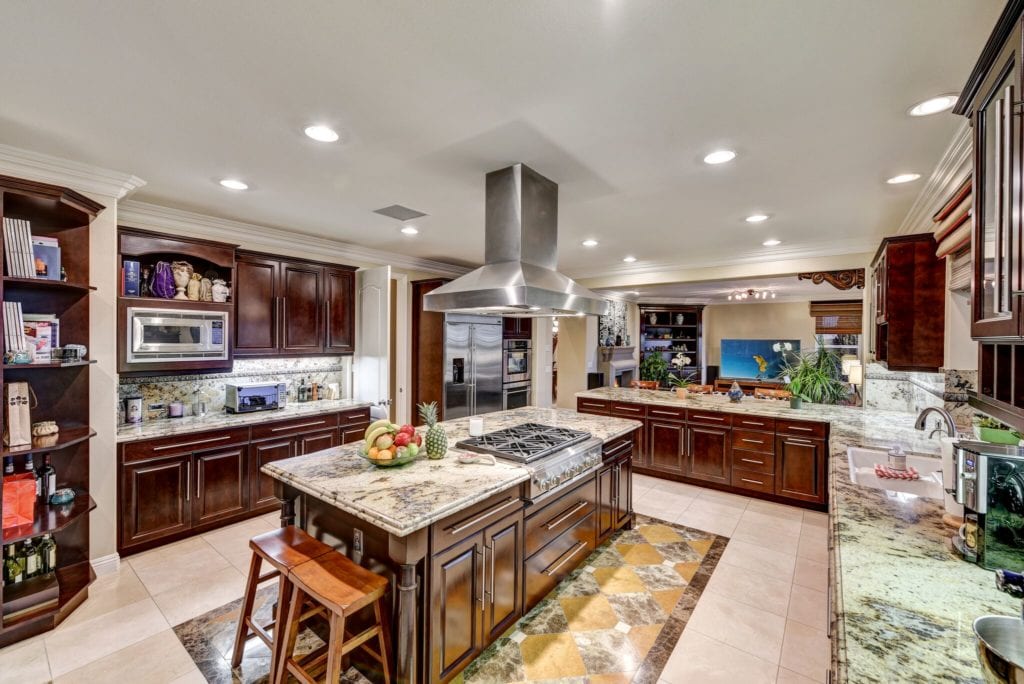
The kitchen remodel is the most emotionally compelling presale investment — and one of the most reliable ways to overspend in a way the market won't reward. A full kitchen renovation in Austin runs $35,000 to $60,000 for a mid-range suburban home. The value added at sale in most Austin suburban neighborhoods: $15,000 to $25,000 at best. You are writing a check for $40,000 to receive $20,000 back.
This is not a hypothetical. Appraisers in Austin's suburban market cap kitchen value contribution relative to neighborhood comparables. If every other home in a Cedar Park subdivision sold between $420,000 and $445,000, your $50,000 custom kitchen renovation does not push your home to $480,000. The appraiser will not support it, and the buyer's lender will not finance it. You will be negotiating the gap at the appraisal contingency stage — after you already spent the money.
What works instead: paint the cabinet boxes, replace hardware, update the faucet, and install a new light fixture over the island. Budget: $3,000 to $6,000. That package removes the "dated kitchen" objection without triggering the over-improvement penalty. If the counters are genuinely damaged, replace them with a mid-tier quartz — not the most expensive slab in the showroom. Your goal is to eliminate reasons to negotiate, not to win a design award.
HOA-Restricted Upgrades: The Approval Risk Nobody Accounts For
This one is specific to Austin's suburbs and catches sellers off guard regularly. A significant portion of homes in Cedar Park, Round Rock, Leander, Georgetown, and Pflugerville sit within HOAs that have architectural review requirements. Adding a fence, extending a patio, changing exterior paint color, installing a pergola or shade structure, or making driveway modifications without prior HOA approval creates a disclosure problem — and sometimes a compliance problem — that surfaces during the buyer's inspection period.
The scenario plays out like this: seller installs an extended covered patio without submitting an architectural review request. Buyer's inspector notes the addition. Buyer's agent requests HOA documentation. The HOA has no record of approval. Now the seller is either retroactively seeking HOA approval during a live contract — which can take weeks and may be denied — or negotiating a price reduction to compensate the buyer for the uncertainty. In either case, the "improvement" has become a liability.
Before doing any exterior work in a HOA community, pull your CC&Rs and check the architectural review process. If you're not certain, call the HOA management company directly. A denied retroactive approval on a patio cover has cost sellers far more than the structure was worth in added value.
Conversion Projects That Reduce Bedroom Count
Converting a bedroom into a home office, media room, or expanded closet seems logical if that's how you use the space — but it directly impacts how the home is listed and appraised. Bedroom count is one of the primary filters buyers use when searching. A 4-bedroom home converted to 3 bedrooms plus a home office competes against 3-bedroom homes on search results, not 4-bedroom homes. You've removed yourself from a larger buyer pool and often reduced your appraised value in the process.
If the conversion involved removing a closet — which is typically required for a room to qualify as a bedroom under appraisal standards — the issue becomes structural in the appraisal. Reversing the conversion before listing is almost always worth it if the room can be credibly restored to bedroom status. If it can't, price accordingly and disclose clearly. Do not make the conversion and then market the room ambiguously — buyers and their agents will catch it, and it becomes a trust issue mid-contract.
Luxury Finishes in Non-Luxury Neighborhoods
This is the over-improvement trap in its purest form, and it's particularly common in Austin's mid-range suburban markets — Pflugerville, Hutto, Manor, and parts of Kyle — where sellers see the quality of finishes in newer construction and try to match or exceed them before listing. The logic is understandable. The math is not.
Appraisers do not value your home in isolation. They value it relative to comparable sales in the same neighborhood and price range. If your street's comps are selling between $340,000 and $365,000, installing $18,000 hardwood floors, custom tile, and a $6,000 primary bath vanity does not move your ceiling. The appraiser will note the upgrades, apply a modest adjustment, and still produce a value that reflects what the neighborhood supports — not what you spent. The buyer's lender will not finance above the appraised value. You will either reduce your price or the deal falls apart.
The rule that applies consistently across Austin's suburban markets: improvements should bring your home to the top of its comparable range, not above it. Know your neighborhood ceiling before you spend a dollar on presale renovations. Your agent should be able to show you the top 5 comparable sales in the last 90 days with finish level noted. If your home is already at or near that finish level, cosmetic updates are enough. If it's below, targeted updates make sense. If it would require $40,000 to reach the ceiling — and the ceiling is only $30,000 above your current value — stop there.
What to Do Instead: The $5,000–$8,000 Presale Checklist That Actually Works
The highest-ROI presale investments in Austin's 2026 market are not glamorous. They are systematic. Think of it as a QA pass before shipping: find everything that gives a buyer a reason to negotiate, eliminate it, and stop there.
- Full interior repaint in neutral tones — $3,000 to $6,000 for a standard home. Single highest-impact, lowest-cost item. Buyers cannot mentally override strong color choices; they subtract money instead.
- Professional deep clean — $300 to $600. Eliminates sensory objections that don't show in photos but hit buyers the moment they walk through the door.
- Pressure wash exterior, driveway, and walkways — $200 to $400. Immediately improves listing photo quality and first impression.
- Landscaping refresh — trim, edge, fresh mulch, replace dead plants at the front entry. $400 to $1,200 depending on scope.
- Fix visible minor defects — cracked outlet covers, dripping faucets, sticking doors, broken cabinet hinges, damaged weatherstripping. These are exactly the items that fill an inspection report and hand the buyer negotiating leverage.
- HVAC service and filter replacement — $150 to $300. An inspector will note the age of the system; a recent service record shows maintenance discipline and reduces the chance of a functional issue appearing mid-inspection.
That full checklist runs $4,000 to $8,500 for most Austin suburban homes. It is not exciting. It will not make your home look like a new build. What it does is remove the friction points that give buyers reasons to reduce their offers — which is exactly the goal in a market where 47% of sellers are already cutting their list price.
Market data sourced from Neuhaus Realty Group (2026 Austin renovation ROI guide), local appraisal benchmarks, and Unlock MLS May 2026 market data. Individual results vary by neighborhood, price range, and specific home condition.Next Steps
Before you spend a dollar on presale improvements, the most useful thing you can have is a clear picture of what your home is worth today and what the top comparable sales in your neighborhood actually look like — not what you hope the market will reward.
- Get a free home valuation — I'll tell you your realistic price range and which specific improvements, if any, make financial sense for your situation
- See recently sold homes near you — understand what finish level and price point is actually clearing the market in your neighborhood right now
- Start your selling inquiry — if you're planning a 2026 listing, earlier conversations mean better strategy and more time to make the right moves
- Check the current market snapshot — see days on market, price reduction rates, and inventory levels for your suburb before making any decisions
- Talk to Vlad directly — I'll run the numbers on your specific home and tell you exactly where to spend, where to stop, and what to price at
Categories
Recent Posts